The first thing you need to know about relocating to the Conejo is that it’s pronounced Koh-nay-hoe not Cone-Joe. Conejo means rabbit in Spanish. The Conejo Valley is one of the most beautiful places on earth and arguably the most special in Southern California. The weather is near perfect. The schools incredible.

For more school info click here
You can go for a breathtaking hike with ardent hikers or your 5 year old one minute and then at the beach the next. We are located midway between Downtown Los Angeles (think Lakers, Kings, Clippers, LAFC, The Galaxy, Angle City, world class museums like LACMA, The Broad and of course The Getty and Broadway theater, Opera and The Philharmonic) and Santa Barbara (think romance, wine tasting, art walks and shopping). Both are 45 minutes without traffic so allow for 1.5 hours as a rule, this is greater LA after all. We have a regional trauma center and hospital and a fashionable indoor-outdoor mall with Nordstrom’s. You’ll find a vibrant biotech hub including biotech giant Amgen, along with Takeda, Atara, and start ups Capsida and Latigo not to mention food giant Dole, music giant Guitar Center, insurance giant Anthem, the LA Rams and the list goes on and on. Home to nearly 200,000 people (about 400,000 when you factor in neighboring Calabasas, Camarillo, Moorpark and Simi Valley) it’s a fantastic place to live, to grow old in or to raise a family.
Thousand Oaks, the area’s largest city, has more than a thousand oak trees. They’re beautiful and grand. Should you find one on the property you like, be advised that you can’t cut it down. You can’t even trim a branch if it is larger than 4 inches in diameter. Suffice it to say the fines for damaging or removing an oak tree in Thousand Oaks are hefty. We do love our oak trees and they are protected. We also love our open space and the Conejo Valley is completely ringed by protected regional, state and national park land including the majestic Mt. Boney, the last mountain in the Santa Monica Mountain range. It makes for spectacular outdoor scenery and activities but it also means you won’t find many new homes being built.

Mt. Boney
The Conejo Valley rests atop the Los Angeles and Ventura County lines. For example, Westlake Village which is home to our most expensive real estate, was incorporated in 1981. However, Westlake Village makes up only half of what we consider Westlake. This is because a California city cannot be in two counties. Thus, when Westlake Village

Westlake Village
became incorporated only the LA County side was allowed to do so. The Ventura County side was absorbed into the city of Thousand Oaks. The zip codes for Westlake south of the 101 Freeway are 91361 for both counties. The address used is Westlake Village. Go north of the freeway and it’s 91362 and called Westlake Village for both counties as well. More significantly, the school districts are entirely different. If you want your kids to go to Westlake High School (Conejo Valley Unified School District) you must live on the Ventura County side. The LA side goes to Agoura High (Las Virgenes Unified School District.)
In 1982 Agoura (pronounced Uh-goor-uh) incorporated into Agoura Hills, leaving behind a swath of homes over the Ventura County border in unincorporated Ventura County. This area originally known as Agoura now bears the name of Oak Park. Oak Park has its own zip code: 91377, its own government and most importantly its own Blue Ribbon school district (Oak Park Unified School District.) Unlike Westlake, Oak Park successfully resisted incorporation into the city of Thousand Oaks. When you ask someone about Oak Park the first thing they mention are the schools. Since most of the schools throughout the Conejo Valley have Great School rankings of 9 out of 10 or better, the fact that Oak Park is known for schools means something special is going on there.
To recap the craziness of the various municipalities and the County Line, we’ve got two Agouras, two Westlakes and three schools districts. There are unincorporated areas as well as 3 sub-cities in Thousand Oaks: T.O. proper, the aforementioned Westlake (part of T.O.) and to the south west, Newbury Park. Temperatures by the way vary from Agoura Hills to the Newbury Park by as much as 15 degrees on a hot summer’s day. Newbury Park is cooler since it’s closer to the ocean. Nothing demonstrates this unique nature of our boundaries better than Westlake Island (and yes there actually is a lake in Westlake). The entrance to the gated island is by way of a street named La Venta. This is derived from LA/Ventura because the road is literally the county line. In fact, “The Island” is smack dab in the middle of the lake (Search for Westlake homes here) and is literally divided in half. Half on the Ventura side, half the LA side. The Conejo is also home to three other lakes. Two that you’ve likely not heard of are Lake Lindero and Malibou Lake. Malibou Lake (yes like caribou) was a cabin-on-a-lake getaway for Hollywood Celebrities as early as the 1930’s.

Malibou Lake
I can picture some famous Hollywood actor bouncing across the San Fernando Valley on a then two lane Ventura Blvd., up and over the Calabasas grade then left into the canyons, finally pulling up to a cabin nestled above Malibou Lake in the foothills of the Santa Monica Mountains. Homes with lake rights are actually part of a co-op called The Malibou Lake Mountain Club and offer a truly unique lifestyle in the mountains while only being 7 minutes to Agoura and the 101 freeway. The lake many people may have heard of is Lake Sherwood, another example of unincorporated Ventura County. Built around the sensational Jack Nicholas designed PGA quality golf course, this community of mostly single family homes starts in the high $2M’s with town homes in the mid $1M range. The Sherwood Country Club has hosted the Tiger Woods Open

Lake Sherwood Golf Course
and Greg Norman’s Shark Shootout golf tournaments and boasts the only tennis club that features all 3 court surfaces. Lake Sherwood was named after Sherwood Forest because Errol Flynn’s 1938 classic film Robin Hood was partially filmed there. Lake Sherwood is unincorporated Ventura County and like it’s even more expensive horse ranch neighbor Hidden Valley, has no municipal government. Resident children attend the Westlake schools on the Ventura County side. In addition to our amazing public schools, the Conejo has a multitude of private schools including Oaks Christian which spans all ages and has had their share of famous name alumni/alumni parents, plus a bunch of other parochial and non-parochial including the esteemed Carden School.
Another curiosity for most first time visitors here is that the Pacific Ocean is both to the west and the south. We are located on the odd part of the California coast line where the state bends so that the ocean is on two sides. Not a big deal but this tends to throw off your sense direction since the 101 freeway runs north-south from San Francisco to Los Angeles except the portion from Ventura to the San Fernando Valley, where it runs east-west.
As for housing… that’s my expertise. In spring 2025, the least expensive single family home was in the upper $700K’s. Prices range to 8 figures when you include Sherwood, Hidden Valley and a handful of homes near the North Ranch Country Club in Westlake. The median is somewhere around $1,200,000. You can also find town homes and senior housing where prices are under those marks and even into the $300K’s. Neighboring Calabasas is generally comprised of pretty high end, gated neighborhoods while Simi Valley, Moorpark and Camarillo (pronounced Kamm-a-ree-oh) offer a greater variety. If you ask residents in each of those adjacent cities, they will tell you all the reasons they actually prefer their town to Thousand Oaks, Westlake or Agoura. In Moorpark for example, when the little league season opens, the entire town shows up for the parade. Moorpark also is home to Moorpark College part of the Ventura Community College system and a natural feeder into UC Santa Barbara, my alma mater. Drive down the major streets of Simi or Moorpark and you’ll see banners heralding local young men and women who are serving in our military. Heck, Simi Valley is home to the Ronald Reagan library.

Ronald Reagan Library
Camarillo will tell you that at sea level you don’t need air conditioning and that it’s home to the Camarillo Airport, the outlet mall and Cal State University Channel Islands with its newly created school of engineering. Located on what was once the California State Mental Hospital, the buildings of CSUCI also claim to be the inspiration of the Charlie “Bird” Parker song, Relaxing In Camarillo. Being a professional musician and Arista recording artist in life BRE (Before Real Estate) I love that trivial fact… Other nearby major universities include California Lutheran (also known as CLU or locally referred to as Cal Lu) once the off season training grounds of the Los Angeles Rams and Dallas Cowboys and of course Pepperdine University in nearby Malibu. Yes, Malibu and everything it offers including Zuma Beach, is just 13 minutes from the Conejo Valley via Agoura Hills or Calabasas. In fact during the summer, teens and preteens can hop on the Beach Bus to get to Zuma. It’s pretty darn cool.
Moving to a new area can be a big life-change, but the Conejo Valley is one place that it shouldn’t be. The Civic Arts Plaza

Civic Arts Plaza
offers great entertainment, touring shows etc., CVUSD has wonderful programs for kids in the autism spectrum (see my Special Needs Resource Guide here), Moorpark has great horseback riding; baseball and soccer reign supreme in all the towns. Virtually every religion is represented including several Catholic churches, the 7th Day Adventist church and Academy, giant Calvary Community Church, Presbyterian, Lutheran and Methodist churches, the Malibu Hindu Temple, multiple Mormon temples, a several Jewish Synagogues plus Chabad, New Age Global Truth Spiritual Center and we even boast a Mosque in Newbury Park, copper dome and all. The canyon roads are popular for motorcycle and sports car enthusiasts as well as cyclists, not to mention vintage watering holes like The Old Place and The Rock Store and half a dozen Farmer’s Markets. So if you’re moving to this area, consider yourself blessed to have such a wonderful place to call home.

Tim
The old timers still use 1000 Oaks, Ca on their return envelopes (thinking about buying or leasing? Visit http://www.1000OaksRealEstate.com here) and will proudly refer to our Valley as God’s Country, because it really is that beautiful. There’s a lot to talk about if you are relocating to Southern California. As a native Californian, California real estate broker, Certified Residential and Corporate Mobility Specialist, I’d like to help with your relocation (contact Tim here). Whether you’re looking for a luxury estate property or a more modest family home or condominium, let me welcome you to your new home right here along The County Line.



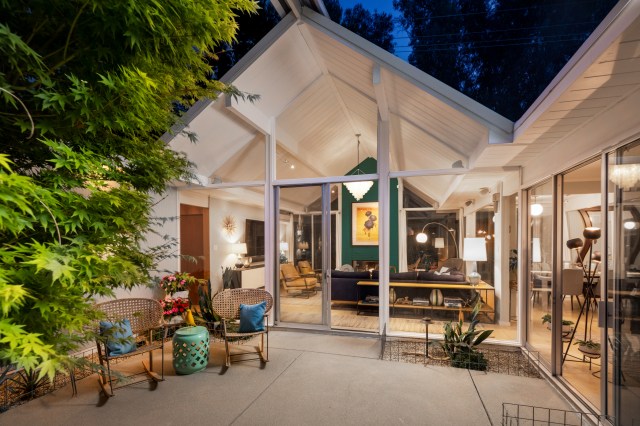


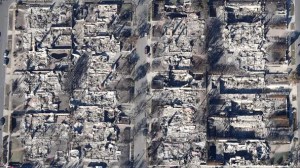 Lots are starting to be cleared. While a very slow and painful process, it is nonetheless the first step to rebuilding. Lots have also been put up for sale. Some have sold, especially in more affordable Altadena where lots are typically selling for $500,000-600,000. Whether the Altadena families will find a way to retain the character of their community remains to be seen. As I write this, there are 32 active fire lots, 31 in contract, and 17 have closed. If you figure total sold and under contract is 48 homes and that’s 2 months activity, you can safely conclude that’s 24 homes sold on average per month and that there is 1.33 months inventory. A seller’s market by any measure. That’s good because while 48 is a big number, consider that 5,500 homes burned down and that is not a big number, that is a massive number. Should every lot sell and no one rebuilds, which we hope doesn’t happen, it would take at present rate 229 months approximately to sell all the lots at current pace. That’s 19 years. As staggering as that might sound, Palisades is in far worse shape.
 At this moment there are 6 fire lots in escrow and 10 have closed. Using the same math as before, that’s approximately 16 sold in the past 2 months or 8 selling per month. But… there are 88 fire lots for sale in Pacific Palisades. This means there are 11 months of unsold inventory. Unquestionably a buyer’s market. Why so different from Altadena? Price naturally. Just how many builders are there, that can put $3-4M down on a lot, wait several years to build and sell? Even though the Palisades is one of the greatest places on earth, it’s too expensive for most people to even participate in this process including many of the property owners themselves. The magnitude of these fires is truly difficult to comprehend but to try and put it in perspective, looking at Altadena, if every lot came up for sale, at current pace there, there are 29 years’ worth of inventory. In Palisades, using a similar approximate number of 5,500 homes (I believe it’s actually higher but that may include Malibu), if all the lots had to sell, there is currently 57 years’ worth of inventory. I know this sounds crazy, but according to County Assessor records of the 488 homes destroyed in Malibu from the Woolsey Fire, just 39% have been rebuilt while 29% or 140 lots have been sold with the balance of roughly 43%, presumably in some process of being sold or rebuilt. By the way for context, the Woolsey Fire was 7 years ago. Similarly, 8 years ago in Ventura, the Thomas Fire burned 500 homes and to date 299 have been rebuilt with roughly 20% sold off as vacant lots. The difference, you guessed it, price… that and the Coastal Commission one would presume. If the Palisades or Altadena follow these trends, we could expect roughly 1,500 lots to come up for sale, but I believe the base land cost for Pacific Palisades is going to drive that number higher.
 Looking at the mass destruction from the Palisades and Eaton Fires, it’s easy to say, rebuild. Before even contemplating this however, you need to first answer the six questions: Who, What, Where, When, Why and How? The Who answer is the most important component and basis of my entire supposition. The Who is local national home builders. The What is homes consistent with what existed previously. The Where is easy, the burn areas. The When is in phases, just like a subdivision. The Why is because it’s the only way to accomplish such a monumental task. The How, is utilizing the private sector in conjunction with government subsidy and incentives to ensure speed, efficiency and profitability for the builders. Now, for the explanation.
 This brings us to the question of The What? What to build? Housing advocates want higher density. To accomplish this, a cluster of lots would need to be strung together to allow for a higher density project. Possible perhaps, but not very likely. Eminent Domain? Again, possible but not likely, though one could envision higher density closer to the major corridors or once existing commercial, which by the way would be a value add for those homeowners that would be required to sell their lots. Clearly, we can’t have everyone build custom McMansions. Thankfully, LA already has restrictions on how much larger a builder can build on a tear down, and this can be more clearly laid out by the builders offering pre designed and approved plans. So, it makes sense that the home builders offer a variety of designs covering a variety of sizes and configurations. One of the concerns many area residents have is maintaining the character of the neighborhood. To accomplish this part of the rebuild, incentives will be provided to builders to utilize and design more architecturally and historically consistent homes. In new home building these are called “Elevations.” The exterior appearance. By incentivizing more classic Southern California architecture, be it bungalow or cabin, Spanish or ranch, builders won’t lose money in satisfying the greater public good and in keeping with the character of the neighborhood. That’s called a win-win in my book.
  The Where is obvious: The areas where the homes burned down. Many will say however, rebuilding in these fire areas is stupid. But with a series of specific construction requirements, homes can be fire hardened and when coupled with some infrastructure improvements to aid in firefighting efforts, we can rebuild where we were before.
 The reality is this: Without decisive action by leadership, many homeowners will not rebuild. The elderly, the under insured, those who own due to generational wealth: “We live in Grandma’s home, but aren’t millionaire Hollywood moguls etc.” These folks do not and will not have the ability to rebuild. What happens to those lots? They will sell to the highest bidder. Ask yourself this, what happens to prices when many lots come on the market at the same time? Prices go down. So who do prices go down for? The most vulnerable and the least affluent. Then ask, what goes in their place? New custom homes. What do they look like? How large will they be? How does this affect the culture and heritage of the community? Ultimately the key to success is leadership. Consider two approaches to disaster rebuilding efforts in California. The Loma Prieta Earthquake of 1989 caused the freeway along Fisherman’s Wharf to be demolished. The discussion of what to do there, quite literally took years. While San Francisco waited for decisions, 4.5 years later the 1994 Northridge Earthquake happened and the 10 Freeway was damaged making a primary artery for LA inaccessible for commuters. Swift action by LA leadership at the time, had workers working 24/7 and the freeway was repaired and up and running in no time. Meanwhile SF leaders were still mulling the Embarcadero Freeway and what to do. Without question leadership is paramount and with great leadership, the afore mentioned plan will work. Will everyone be happy? Of course not, but I believe it is the only logical course of action. (
 The Fires… I am already receiving calls from agents looking for certain types of homes for buyers who’ve lost their homes in the fires. Like before the fire, attention will likely be focused on turn-key homes since the victims will have plenty of repairs and updates ahead of them rebuilding their burned-down homes. This group of buyers will probably be fairly small in number, when compared to the total of lost homes. However, the number will be significant enough given the affluence of The Palisades and Malibu victims, to put additional pressure on the spring market inventory. This will push prices higher by some measure.
 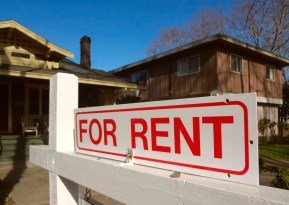 For many landlords, it’s been a very long time since they themselves were tenants. The second step is understanding why a landlord wants to be a good landlord. To a tenant, a good landlord takes pride in their property. They are interested in maintaining the home and understand and respect the value of a good tenant. I often tell my landlords, a good tenant is worth their weight in gold. That’s not to say a landlord should ever be beholden to a tenant or that the tenant should be allowed to dictate terms. The homeowner is always in charge. It’s their home. A good tenant should be grateful that the landlord is allowing them to rent their home, regardless of how qualified that tenant is but in return, the landlord has to live up to certain responsibilities and understand their tenant’s expectations. It’s a two-way street that requires mutual respect and cooperation.
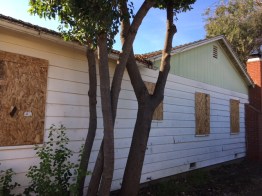 For him, getting the home ready consists of wiping down the counters and baths, taking a lawn blower and “blowing out the home” and then vacuuming. While this method may work for him, it’s not the approach I recommend. I am of the opinion that the more pride a landlord takes in the condition of their property, the better the tenant will treat and respect it. Obviously, there are always going to be tenants that get into a place and are total slobs and disrespectful to the home. However, as a Realtor who’s done my share of lease applications, we do our best to try and screen this type of thing out. Looking at credit history is one obvious data point, but these days we also Google our applicants and look at their social media pages too. It’s a lot easier to truly find out about people by this method than just looking at credit or income. I tell my kids, be careful what you post, you never know who’s going to see it!
 Let me tell you, you would not want to have me care for your yard. I only kill gardens and can’t grow squat. Since there’s no way to know if a future tenant has a green thumb or not, there is no benefit to the landlord to give the tenant the option of caring for the yard. Landscaping replacement is expensive and most deposits won’t cover the cost of a new lawn or plants and flowers. A good landlord offers gardening with the rent, it’s in their best interest.
 Most landlords apparently don’t own pets – not sure why that it is but it’s true, while most tenants do. I make it a policy to try and get my landlords to accept pets. There are a couple reasons for this approach. The most obvious is that it’s easier to rent your home if you accept pets. Second is that a tenant who has a pet could lie and bring the pet in anyway and while this is a violation of the lease terms, it’s difficult to police. Another more recent issue is that under nondiscrimination laws, if a tenant has a service animal you can’t turn them away. By the way, it’s easy to get a dog certified as an Emotional Service Animal. If you look online, there’s a bunch of online services. Last year I had a landlord turn down 7 applicants including one willing to pay a full year in advance because they didn’t want pets. Finally, we found a tenant who didn’t have a pet and took even less than asking when accepting them. She moved in without a pet. Two months into the lease there was a school shooting at USC where her daughter attended. The daughter ended up moving home and commuted to school. Since it was determined that she was suffering from PTSD, her doctor recommended she get a service dog. It helped her immensely but the landlord who so adamantly refused a pet, ended up taking a pet anyway and without compensation in the form of “Pet rent.” By the way, in California a landlord can only take up to two times the monthly rent as a deposit. That means not 2 months plus pet deposit. The total deposit cannot exceed 2X rent. When a prospective tenant comes forward with a pet, the way the landlord gets compensated for taking a pet is by charging a little more rent for the pet. I call it pet rent. $25 or $50 helps offset any extra potential wear and tear that a pet brings and most tenants don’t object because after all, they love their pet and it’s a small price for them to pay to get the home they want and keep their pet. On a side note we are seeing many of our military service members come back from war and they have service animals with them. It’s just become a fact of life.
 So, what does all this have to do with inflation? Since these two elephants are putting undue pressure on both prices and rents, and housing represents up to 45% of the CPI, the read that the Fed is getting is warped. This in turn means that the Fed will keep rates higher for longer. Higher rates mean higher borrowing costs (higher costs=inflation) not just for consumers but more importantly for developers. If you doubt this look no further than #BarrySternlicht of #StarwoodCapital who controls over 7,000 single-family homes, and a total of 290,000 residential units. Mr. Sternlicht says (and I’m paraphrasing) that we as a nation have a housing shortage and that higher rates mean less construction since developers are the first leg on the borrowing ladder.
 I was on a listing appointment yesterday with the most sophisticated of sellers selling a $2.3M home in Calabasas, CA. We discussed everything normally discussed on an appointment and confirmed I would be charging a 5% commission which I would be sharing with the buyer’s agent 50/50. My client being in finance asked me, “Before we finish, what are your thoughts on the N.A.R. settlement?” Now you may be thinking I might not know how to answer this, or maybe I was nervous or even dreading the question. I was not and knew exactly how to answer this because commissions have always been talked about at listing appointments and they are always negotiable.


 The Real Estate Conversation